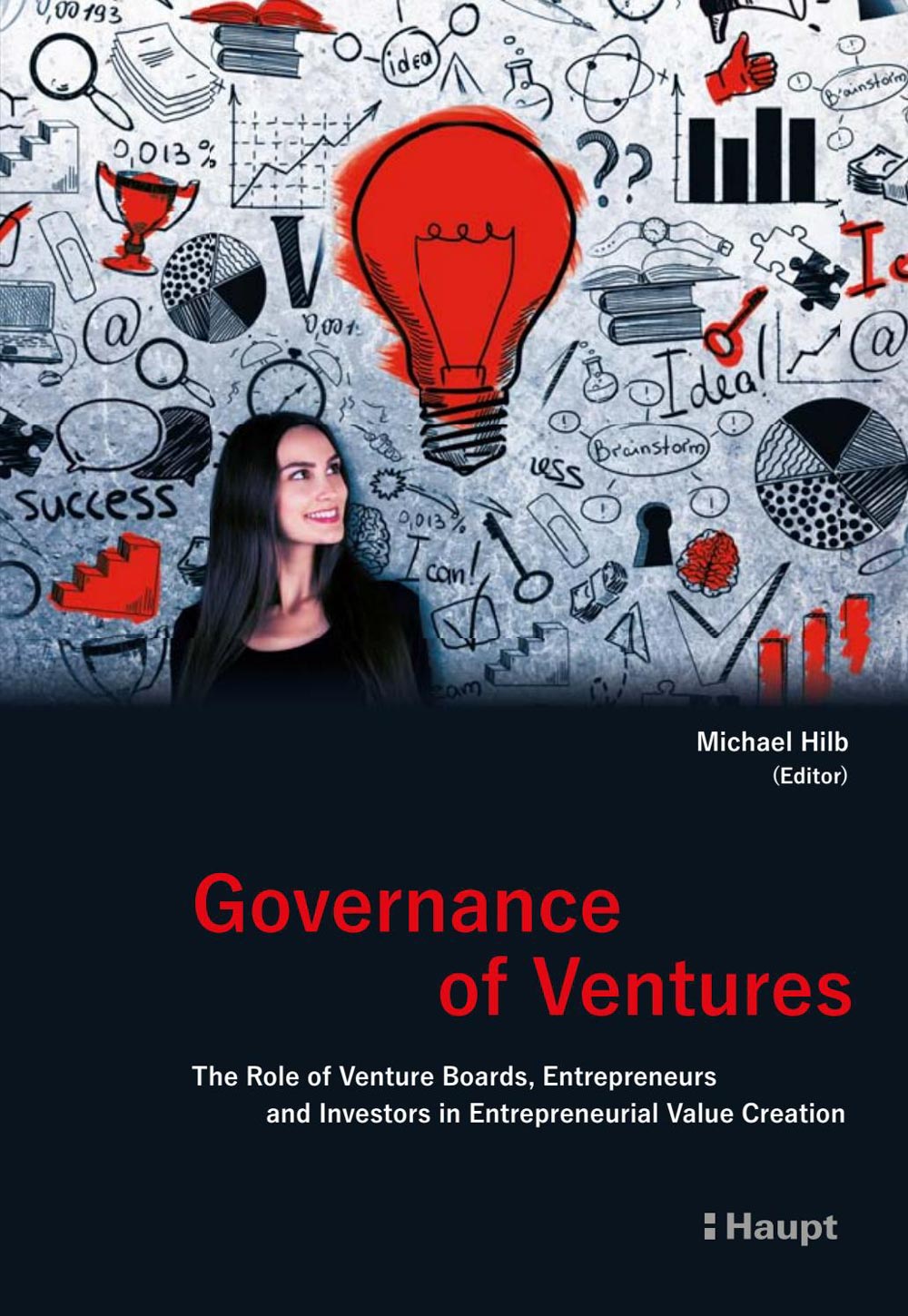
In times of disruption, venturing becomes a key source of value creation. As new opportunities emerge and existing models fade, entrepreneurs, corporates and investors are eager to explore and exploit those opportunities. Venture governance, i. e. defining, implementing and following a fit-for-purpose model to provide direction and control in the best interest of all stakeholders, plays a crucial role in enabling and ensuring entrepreneurial value creation. This book presents twelve perspectives on the governance of ventures, bringing together viewpoints from both practitioners and academics. It provides practical insights, introduces new perspectives and invites the reader – whether a member of a venture board, an entrepreneur or an investor – to reflect on their own approaches to venture governance.
 Board Cases
When Governance Ends through Inaction
Boards of Directors face a structural tension regarding mandate duration. While legal requirements clearly define the role of the general meeting and term limits, in practice these rules are not always consistently applied, leading to uncertainty and de facto extensions. The Federal Supreme Court decision clarifies that governance cannot be prolonged through inaction and that the general meeting must actively exercise its authority. Effective governance depends on clear accountability and functioning institutional processes, not on habit.
 Board Views
From Corporate Governance of Sustainability to Sustainable Corporate Governance
What is the best way to integrate sustainability into the corporate governance framework? Boards of directors have chosen two distinct paths: the functional way, which focuses on corporate governance of sustainability, and the foundational approach, which leads to sustainable corporate governance. This article assesses the merits and limitations of both approaches and calls for a transition to sustainable governance. This requires board members to engage regularly with stakeholders and to continuously debate the underlying assumptions to further develop the governance framework as required.
 Board Views
The Multipurpose Corporation as a Driver for Sustainable Value Creation
The nature of the debate on the role of business in society strongly suggests a cyclical nature, with constant attempts to balance different interests and perspectives. To overcome the illusion of solving this conundrum, this article proposes an alternative approach, multipurpose capitalism. It posits that companies should compete not only on their products and services, but also on their different purpose profiles. It is left to consumers, workers, and investors to decide where to shop, work, and invest. The article offers a framework and methodology to create a comprehensive ecosystem that enables this matching process and suggests ways to overcome the challenges along the way.